Two Days in Istria
A cross-border taste of Slovenia and Croatia

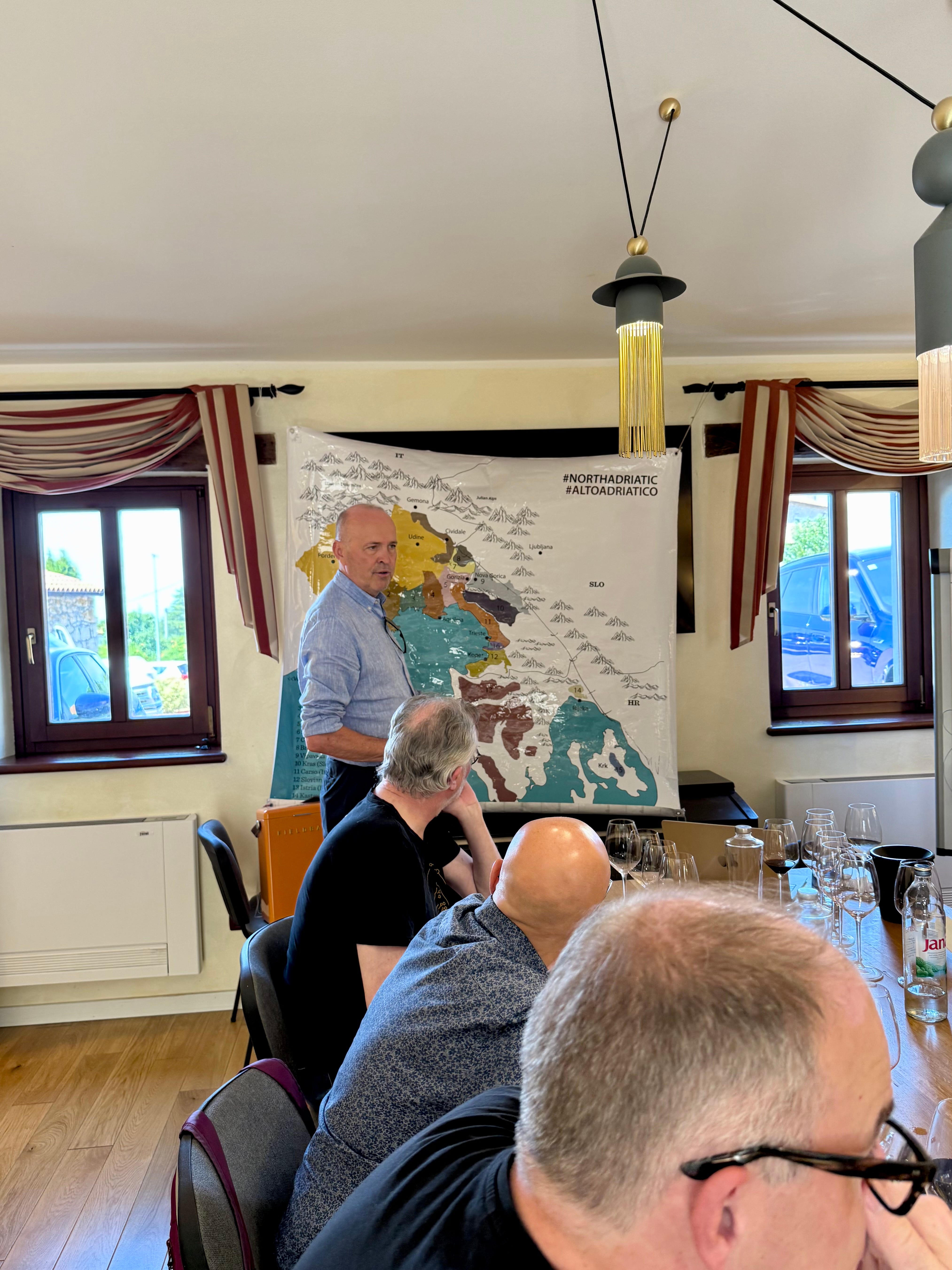
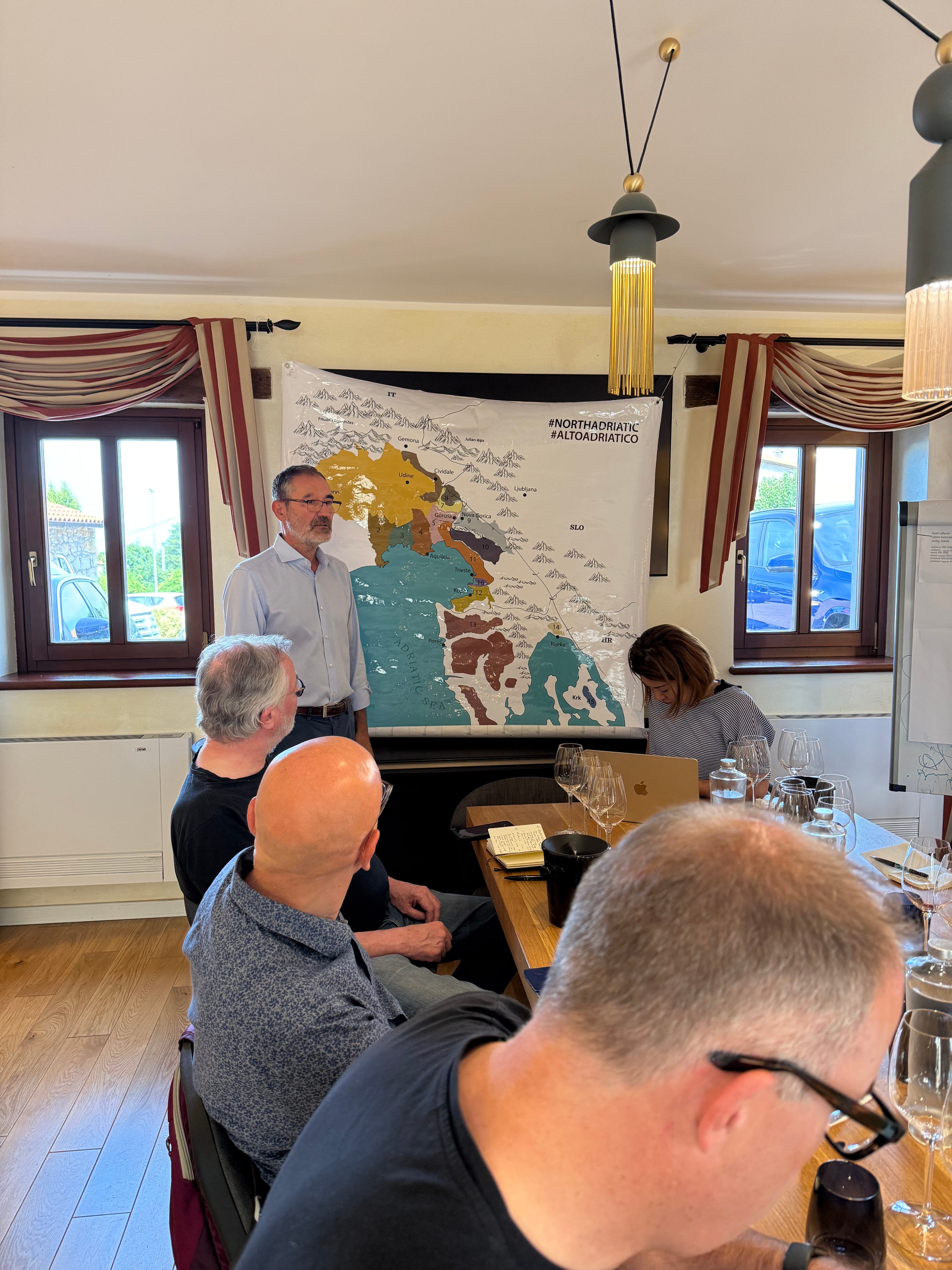
During summer 2025, I spent a week traveling through Europe’s broader North Adriatic wine region. Led by Paul Balke, the author of North Adriatic: Friuli Venezia Giulia / West Slovenia / Istria, our group of journalists visited key DOCs across three countries: Italy, Slovenia, and Croatia. In his book, Balke asserts the North Adriatic as a whole should be recognized as a “premium wine-terroir” — “one terroir, three countries” — similar to other greats like Bordeaux, Rioja, Tuscany, etc. However, I also believe each region deserves to be in the spotlight, like Istria, where we spent two days.
Stretching along the north Adriatic, the Istrian peninsula includes Slovenia, Croatia, and a smidge of Italy. A cross-border journey of Slovenian and Croatian Istria explored two of the three—where terraced vineyards meet historic seaport towns and indigenous varieties like Bianchera, Malvazija (Malvasia), Rumeni Muškat (Muškat Žuti/Yellow Muscat), Borgonja (Frankovka/Modra frankinja), Refošk (Refosco), Teran, and Cipro (Muškat Ruža/Rose Muscat) —as well as a number of international varieties—thrive in a variety of soils. From Slovenia’s coastal vineyards to Croatia’s inland hills, the region’s wines, cuisine, and people share an unmistakably passionate Adriatic rhythm—rooted in history and best experienced glass by glass and bite by bite.
Slovenian Istria
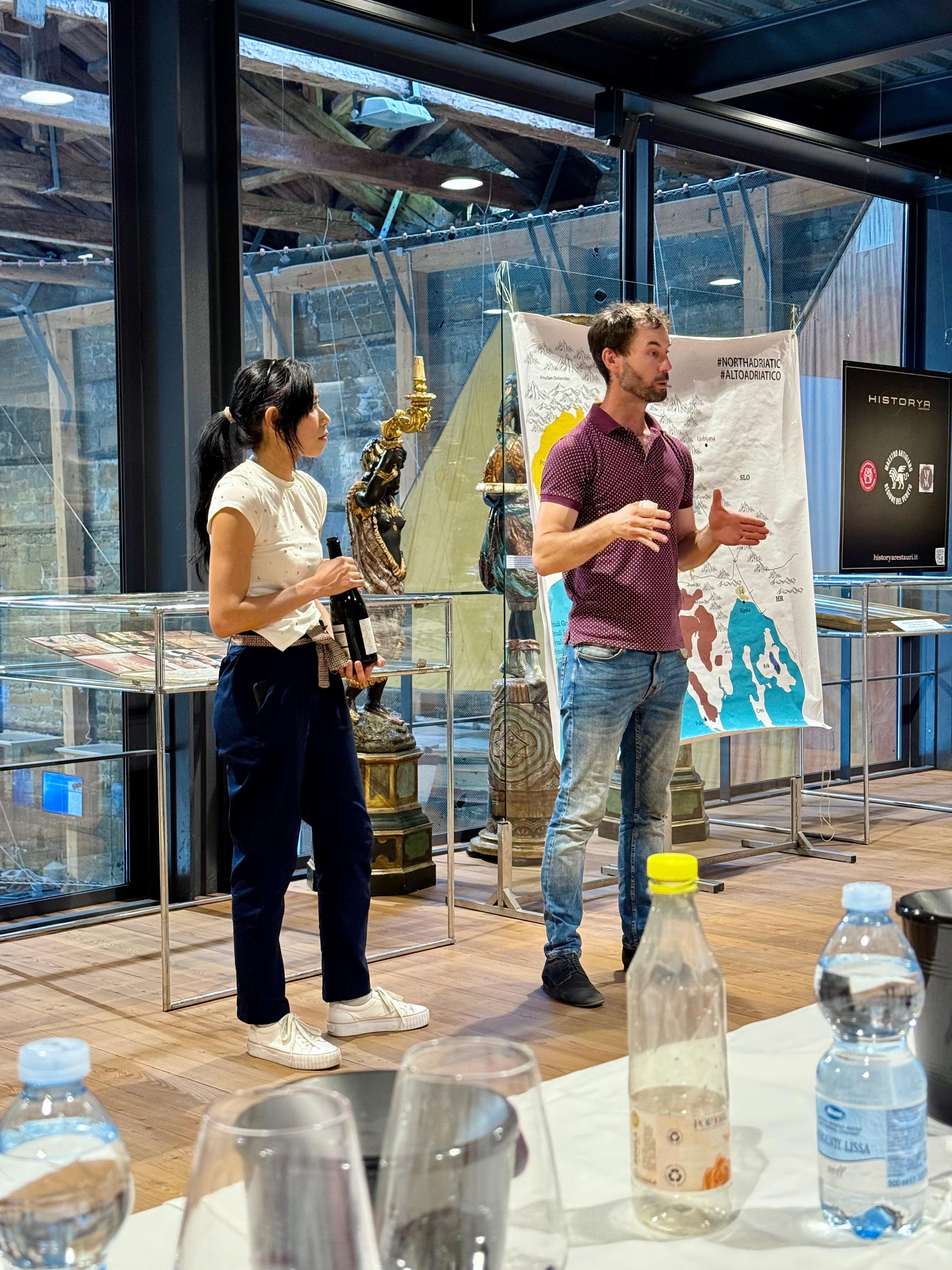
The tour began along Slovenia’s Adriatic coast in the town of Piran/Pirano with a tasting inside of the former salt production warehouse at Portorož, now a ship museum, the Sergej Mašera Palace Maritime Museum (Pomorski muzej/Museo del Mare Sergej Mašera). The blend of the city’s maritime heritage and coastal beauty was a wonderful setting in which to taste wines from some of the region’s producers. Before heading to Croatia, the group concluded the day with a stroll through town and an outstanding dinner at Stara Gostilna Vecchia Osteria hosted by Ingrid Mahnič of Kmetija Mahnič and president of the Association of Winegrowers of Slovenian Istria.
Wineries
Gordia
(Website)
Perched above Ankaran, Gordia crafts wines from organically farmed vineyards overlooking the Gulf of Trieste, influenced by sea breezes and marl-rich soils. The winery specializes in skin-macerated “orange” wines, terroir-driven Malvazija, Rumeni Muškat, and Refošk, as well as Chardonnay, Pinot Gris, Sauvignon Blanc, Cabernet Sauvignon, Merlot, and Syrah. Recommended wine: Natural Bubbles Rosé, a vibrant, juicy Pét-Nat made from Refošk and Merlot.
Korenika & Moškon – 1984
(Website)
Founded in 1984, Korenika & Moškon is a biodynamic pioneer in the village of Korti, with amazing views of the Sečovlje salt pans. Their vineyards and olive groves are organic, producing Malvazija, Pinot Blanc, Pinot Gris, Rumeni Muškat, Refošk, Cabernet Sauvignon, and olive oil. Recommended wine: Malvazija Paderno 2023, floral, fruity, and mineral-driven.
Kmetija Mahnič
(Website)
A 15-hectare (37-acre) family estate, restaurant, and accommodation near Dragonja, Mahnič is a farm with vineyards, olive trees, orchards, and vegetables. Ingrid Mahnič’s leadership in promoting Istrian terroir is matched by her elegant wines and artisanal olive oils, reflecting the natural harmony of coastal Istria. Varieties include Bianchera, Malvazija, Refošk, Bela (White) and Črna (Black) Borgonja, Chardonnay, Pinot Gris, Rumeni Muškat, Momjanski Muškat, and Cipro. Recommended wine: Črna Borgonja 2018, rich with black fruits and supple tannins.
Montemoro
(Website)
Montemoro produces certified organic wines that highlight the unique limestone and flysch soils of northern Istria. The winery’s minimal-intervention approach and focus on indigenous varieties like Malvazija, Refošk, and Rumeni Muškat express authenticity and refinement. Recommended wine: Orange Joy Malvazija 2016, a macerated wine that’s aromatic and layered with minerality, spice, and ripe stone fruit flavors.
Rojac
(Instagram)
Located in Gažon, just inland from Koper, Rojac produces elegant, characterful wines from vineyards whose climate is moderated by both sea breezes and Balkan mountain currents. Stony soils and calcareous subsoils yield structured, mineral-driven Bianchera, Malvazija, and Refošk. Recommended wine: Bianchera 2022, elegant, yet powerful, savory, and herbal.
Vinakoper
(Website)
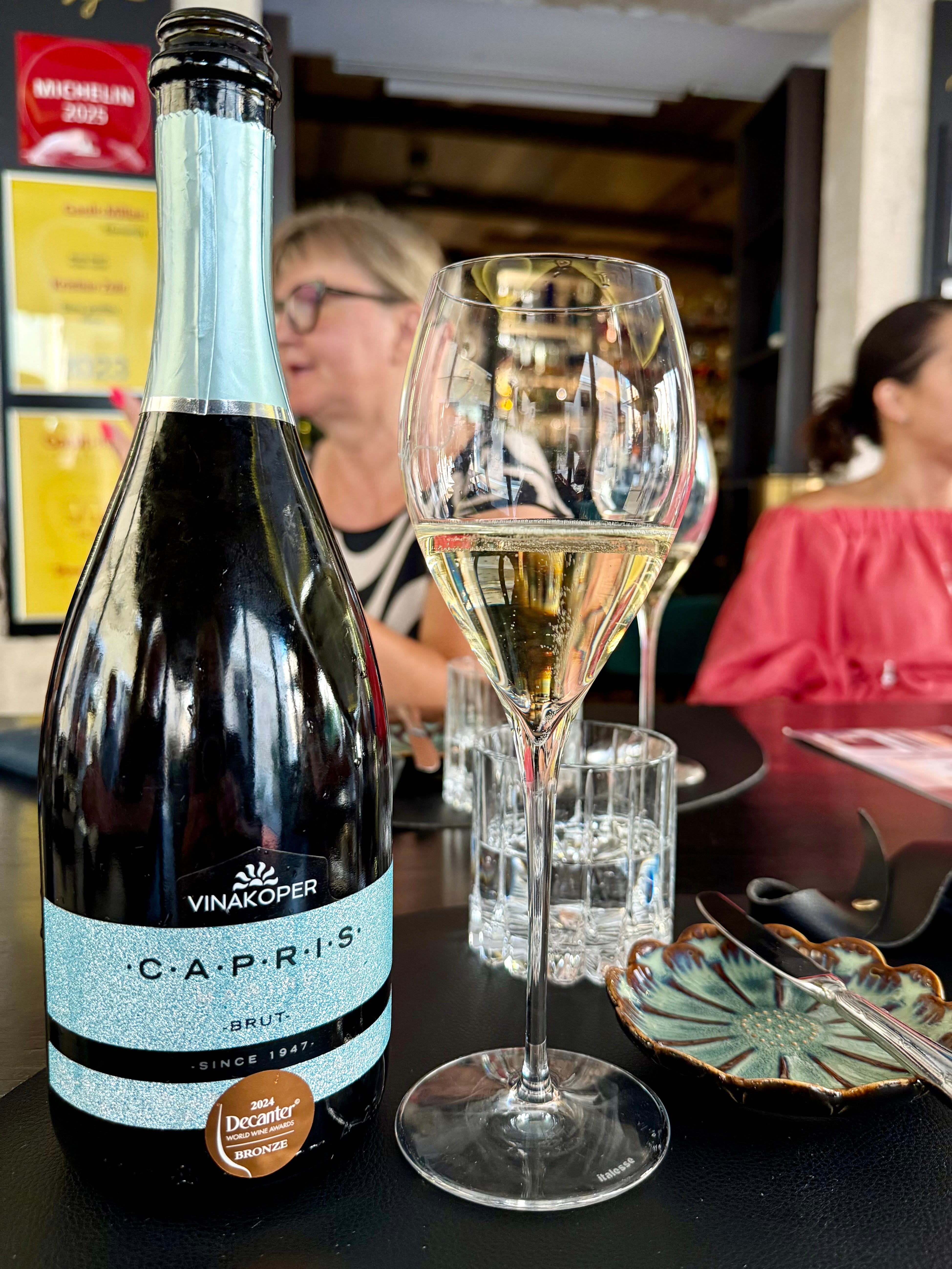
The largest producer in Slovenian Istria, Vinakoper was founded in 1947 and now cultivates 570 hectares (1409 acres) across 10 locations. Known for their flagship Refošk and Malvazija, they blend traditional winemaking techniques with modern technology reflecting the region’s maritime terroir. There’s also a restaurant on site. Recommended wine: Capo d’Istria 1072 2022 (Decanter Gold), a rich, bold blend of Shiraz, Merlot, Cabernet Sauvignon, Cabernet Franc, and Refošk.
Vina Montis & Eko Laura
(Facebook)
This small, family-run organic estate produces natural wines in harmony with Istria’s Mediterranean climate. The winery emphasizes biodiversity and minimal intervention, resulting in expressive wines. Recommended wine: Malvazija Montis 2022, a savory macerated wine from a 78-year-old vineyard.
Sightseeing and Dining
Piran
(Tourism Website)
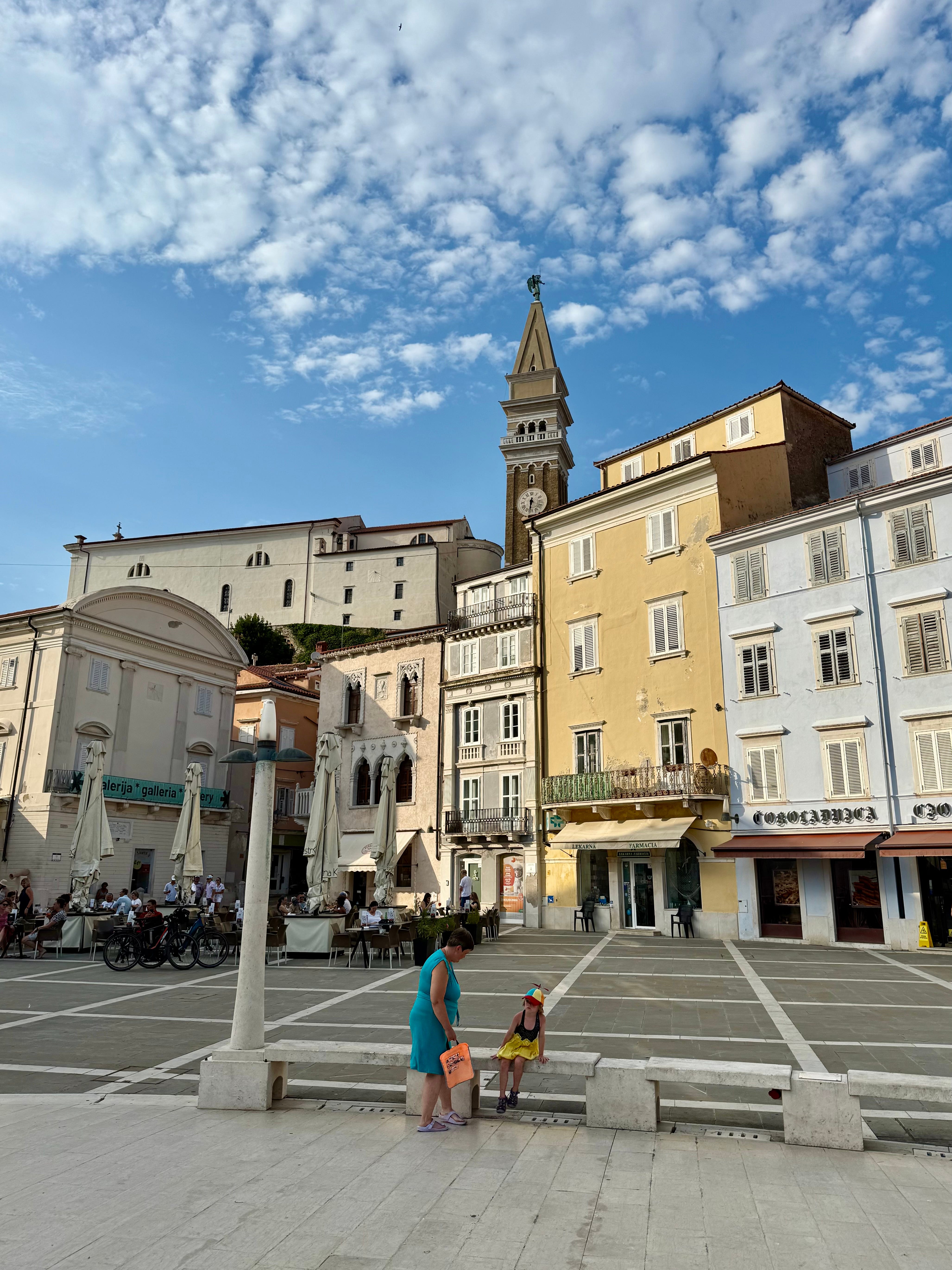
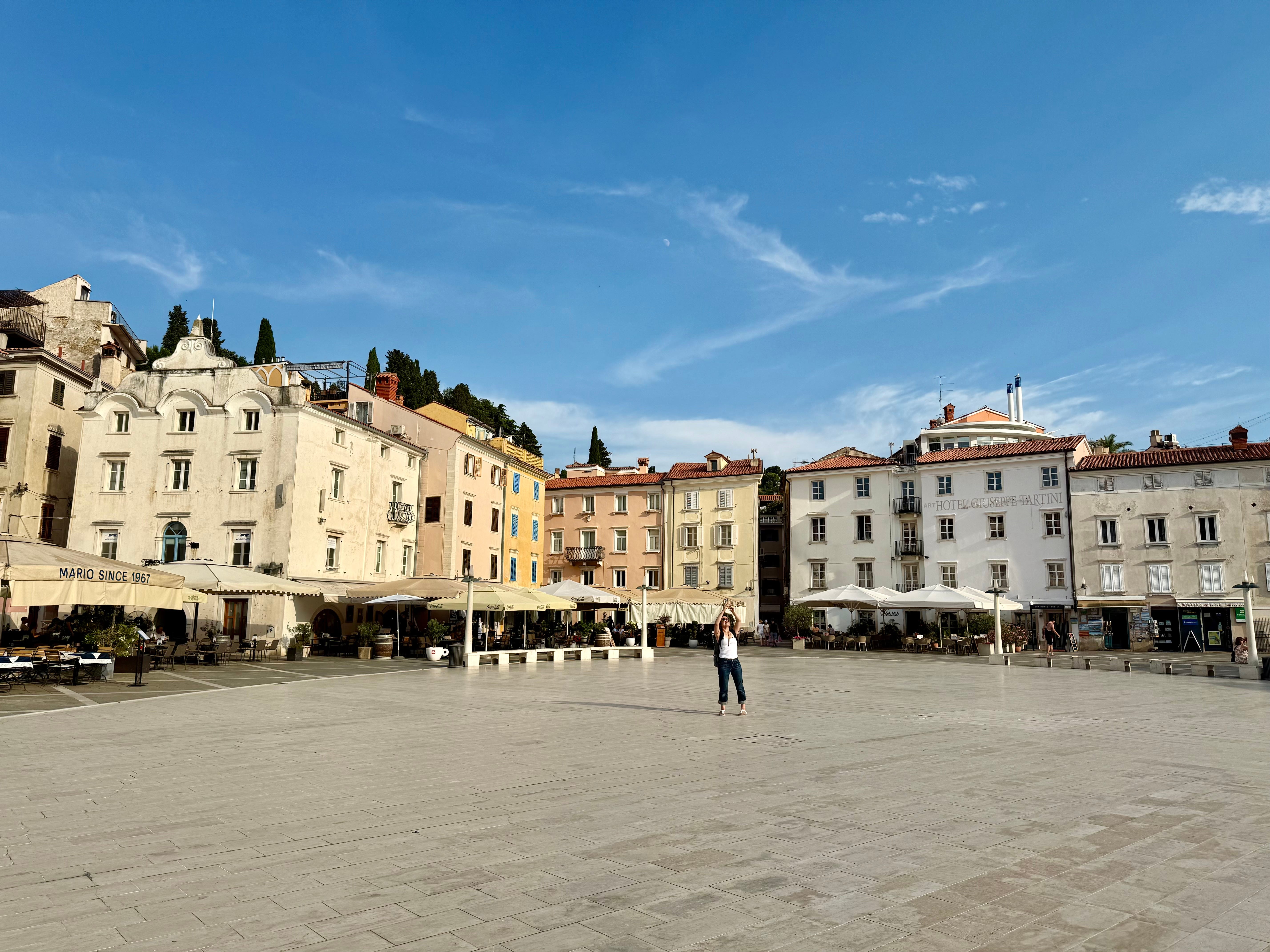
Piran is a jewel of the Slovenian coast, a Venetian-style fishing town with pastel façades and cobblestone streets. The main square, Tartinijev Trg (Piazza Tartini), honors violinist and composer Giuseppe Tartini. Its promenade offers gorgeous views across the Adriatic to Italy.
Sergej Mašera Palace Maritime Museum (Pomorski muzej/Museo del Mare Sergej Mašera, Portorož)
(Website)
Housed in a former salt warehouse, this maritime museum honors Piran’s and Portorož’s seafaring past. Surrounded by artifacts of Istria’s maritime heritage, the venue provided a rich cultural and historic backdrop for the tasting.
Stara Gostilna Vecchia Osteria
(Website)
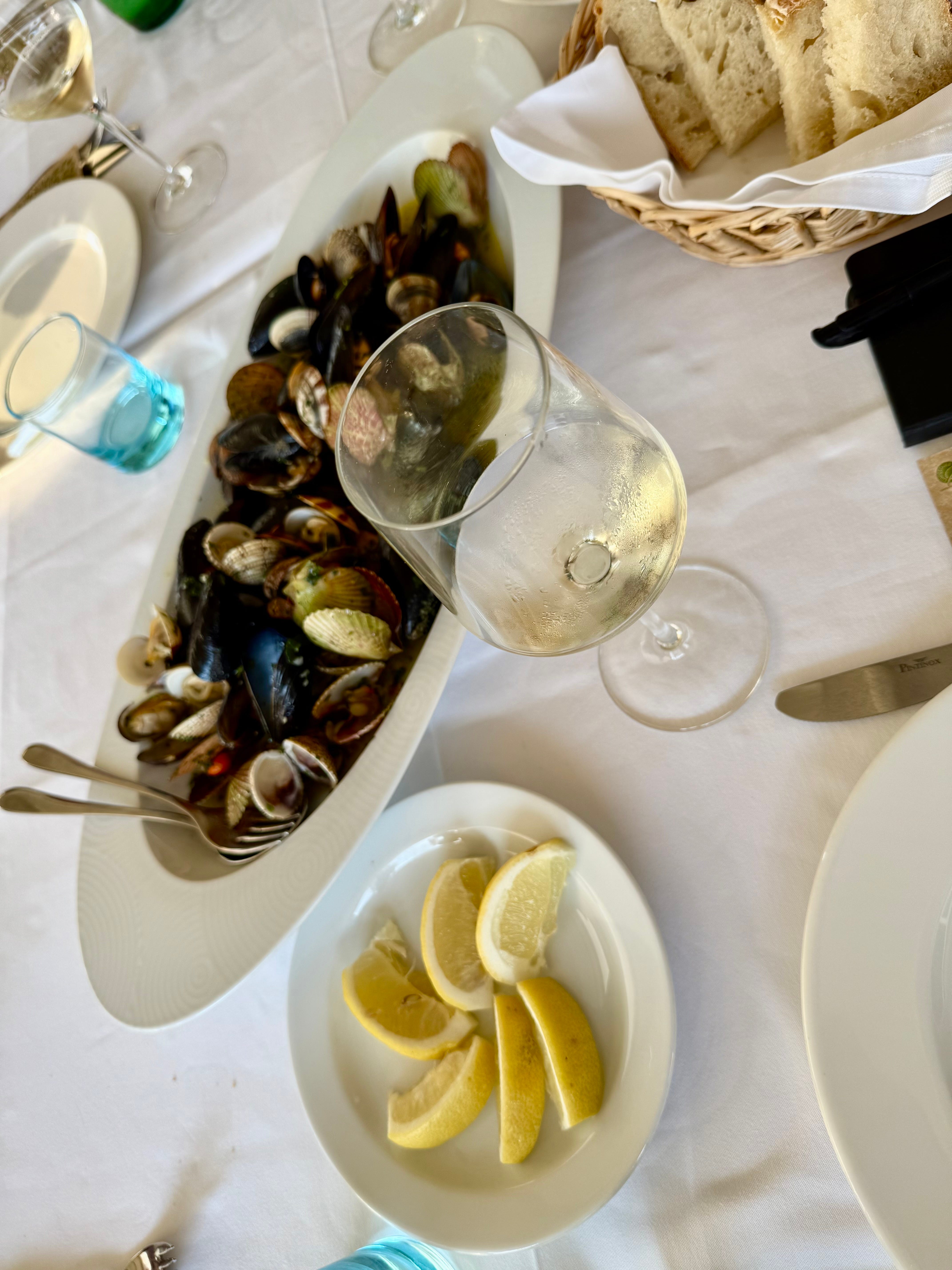
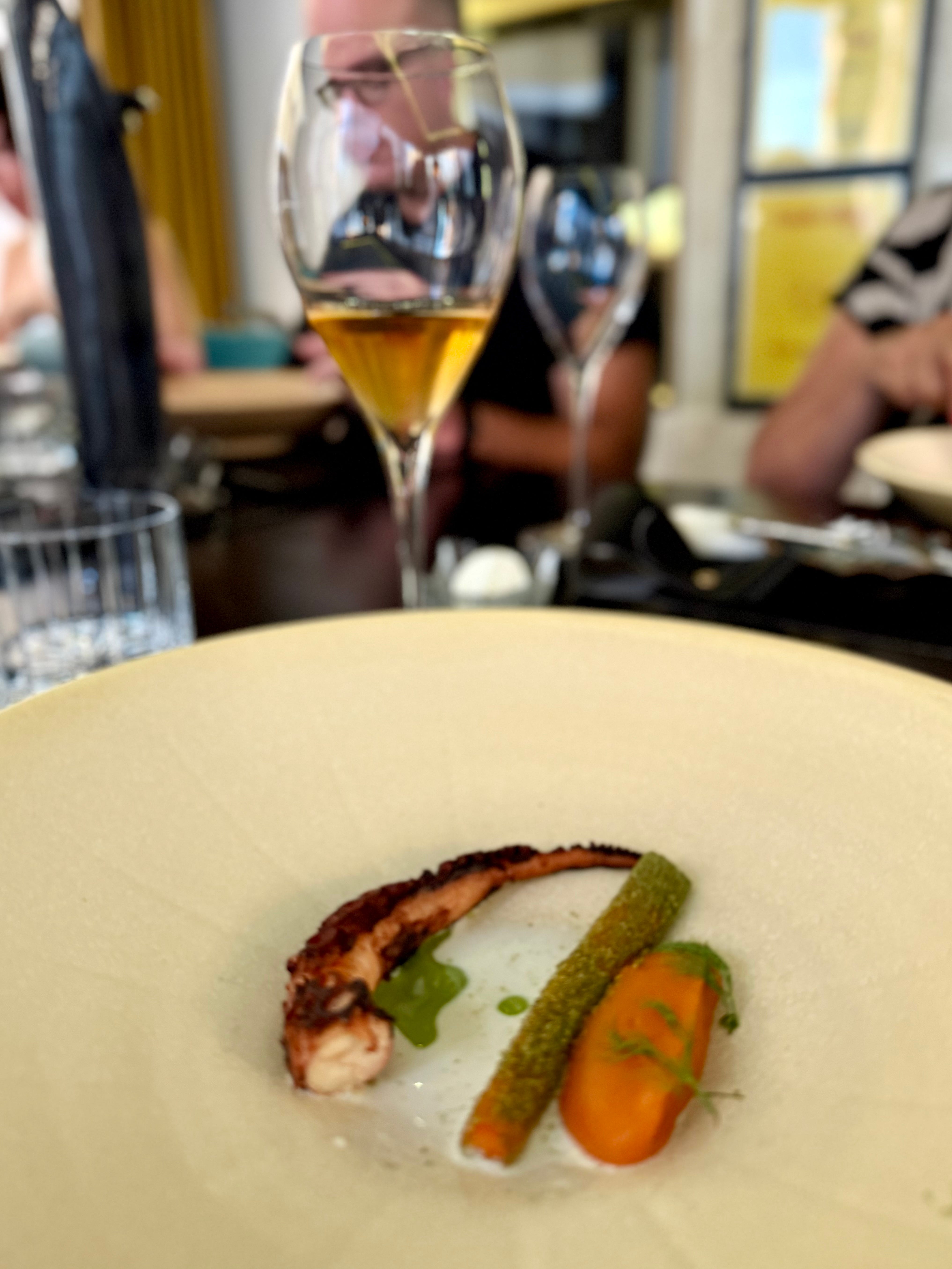
A Michelin-listed restaurant in Piran, Stara Gostilna Vecchia Osteria blends Istrian ingredients with an elevated culinary style. The refined multi-course dinner with Ingrid Mahnič featured primarily local and seafood dishes paired with regional wines.
Croatian Istria
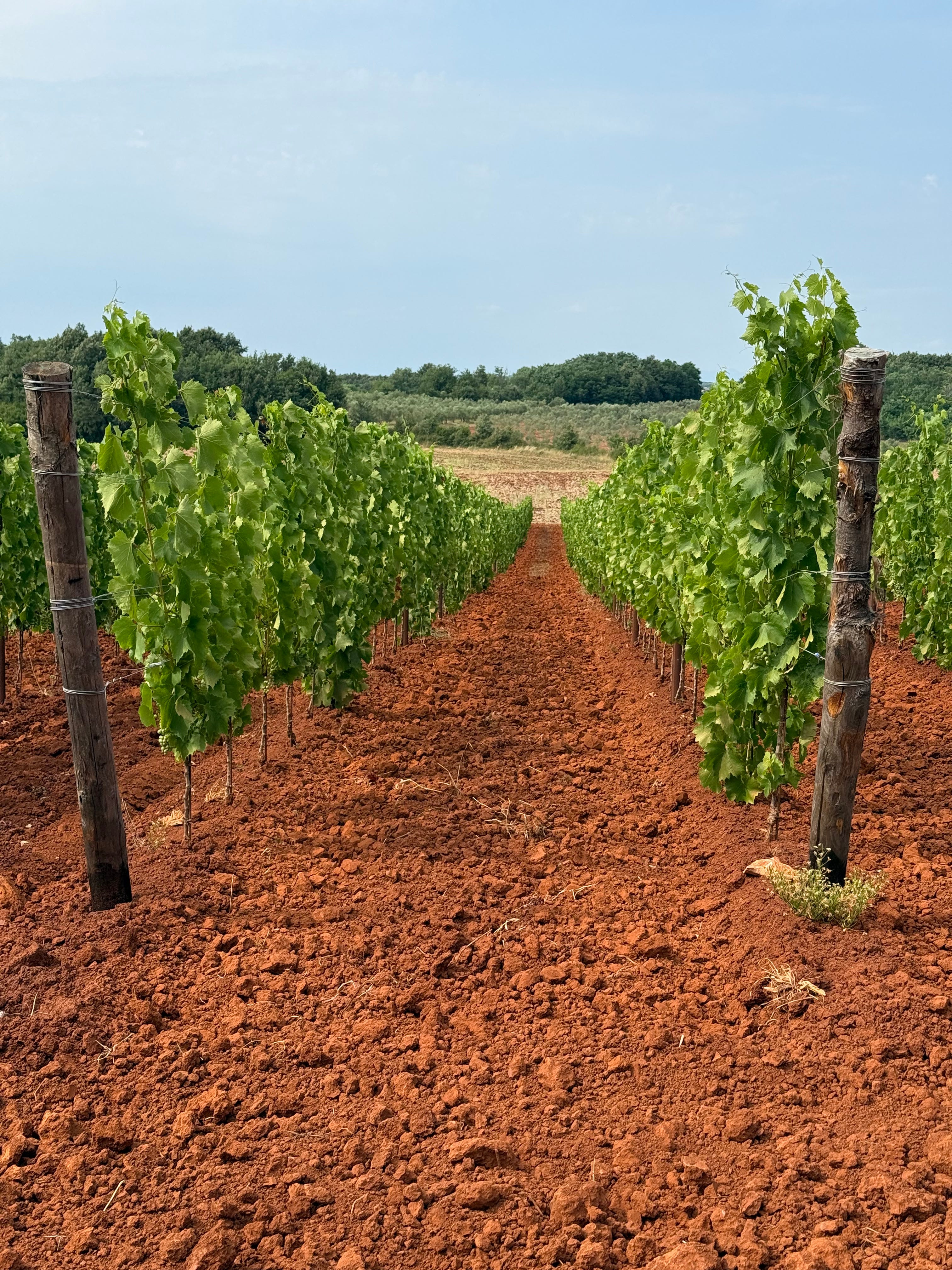
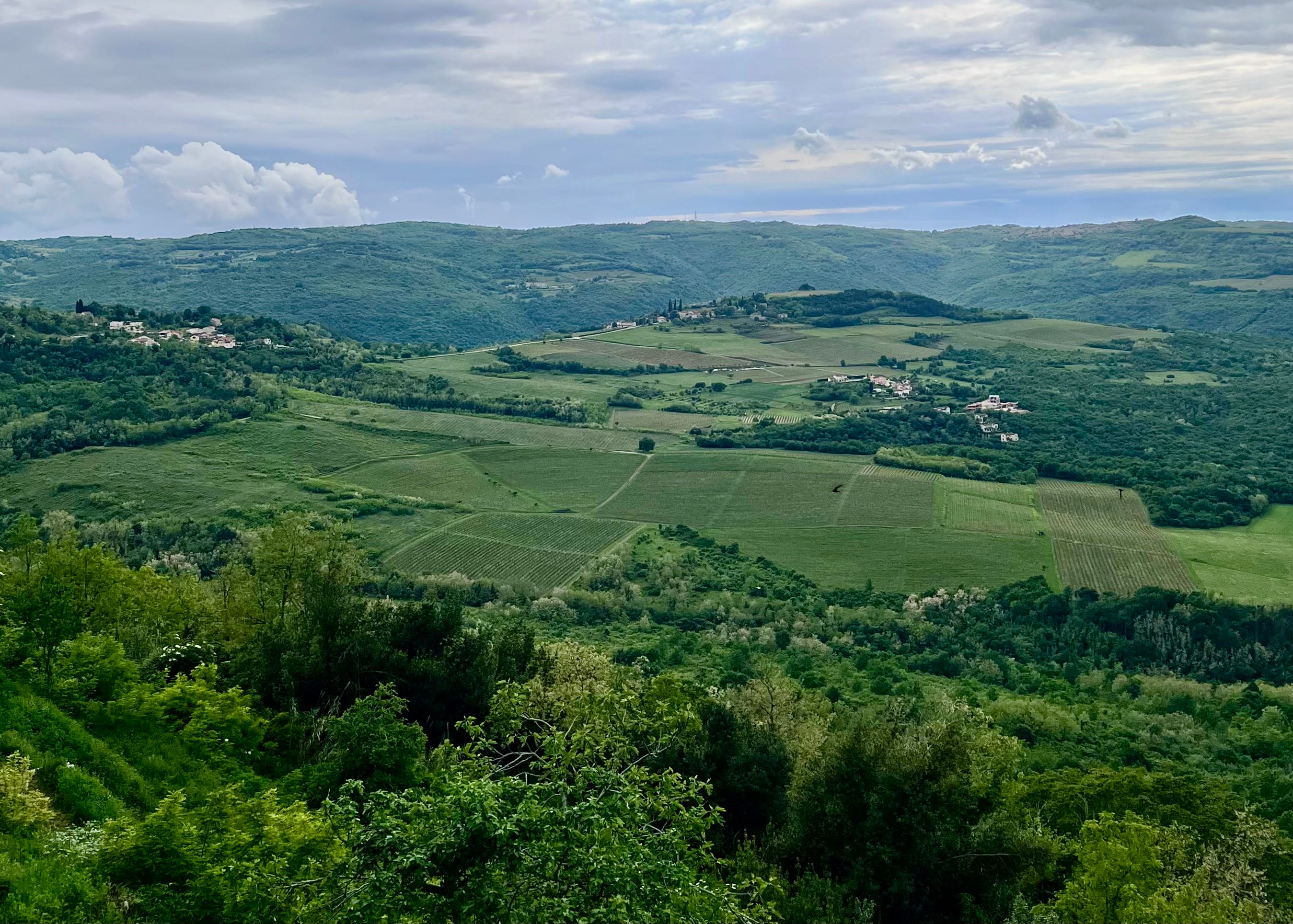
Crossing the border into Croatia, the second day traversed northern Istria’s interior—a geologic contrast of red “terra rossa”, white flysch, gray marl, and black soils. This diversity is the foundation of the area’s mosaic of vineyard terroirs, visible from nearly every winding road taken through the region.
The day began with a wine tasting and lunch at Hotel & Ristorante San Rocco in Brtonigla-Verteneglio. After lunch, a relaxing scenic drive followed, including astounding views of the region’s vineyards and Adriatic coast, a stroll around Grožnjan/Grisignana and a visit to the atelier of artist Marko Brajković, plus a stop to see an example of the red “terra rossa” soil. The evening concluded with a sunset dinner by the sea at Zlatna Vala, followed by a late-night tour and tasting at Roxanich Winery & Design Hotel in Motovun, the group’s accommodations for two nights.
Wineries
Cattunar
(Website)
Located in Brtonigla-Verteneglio, Cattunar makes around 50,000 liters annually from 10 hectares (25 acres), including Malvazija (80% of its production), Teran, Muškat Bijela, Muškat Ruža, and more. The estate’s red, white, gray, and black soils reflect Istria’s complex geology. The winery also has an accommodation for overnight stays. Recommended wine: Evita Premier 2017 – a late-disgorged, traditional method sparkling made from Malvazija, Chardonnay, and Pinot Grigio that spends six years on the lees, both lively and rich.
Clai
(Website)
Clai, near Buje, produces natural, macerated wines—around 35,000 bottles per year—from indigenous and international varieties. Its amber wines, made with long skin contact, epitomize Istria’s innovative spirit. Recommended wine: Pjenušac 2020, a vibrant brut nature, traditional method sparkling made from Surina (Plavina), Malvazija, and Chardonnay.
Coronica
(Website)
Coronica’s vineyards near Umag are rooted in red “terra rossa” soils that shape structured, mineral-forward Malvazija Istarska and expressive Teran. The winery remains one of Istria’s leading names for authentic, terroir-driven wines. Recommended wine: Gran Teran 2021, the winery’s rich red that’s only made in optimal vintages.
Cossetto
(Website)
With 10 hectares (25 acres) of vineyards and 50,000 liters of production annually, Cossetto focuses primarily on Malvazija (80%). The emphasis on freshness and varietal purity yields fruit-forward wines representative of coastal Istria. Recommended wine: Malvazija Rustica 2022, a macerated wine that spends three years in oak; only produced in the best vintages.
Degrassi
(Website)
A renowned estate near Savudrija, Degrassi bridges tradition and innovation. Their portfolio includes both indigenous and international grape varieties, showcasing balance, elegance, and coastal character. Recommended wine: Malvasia Bomarchese Selekcija 2020, a later-harvest, macerated wine from the region’s white soils, complex and savory.
Kozlović
(Website)
Among Istria’s most acclaimed wineries, Kozlović produces several Malvazija styles—from fresh stainless-steel to the prestigious Santa Lucia cru. Modern architecture meets tradition at their state-of-the-art Momjan facility. Recommended wine: Malvazija Santa Lucia 2018, a single-vineyard wine aged for six months in barrel and six months in stainless steel (INOX), showing an elegant balance of freshness and maturity.
Matosević
(Website)
Ivica Matosević is a pioneer of modern Istrian winemaking, known for his Malvazija, Teran, and international varieties like Chardonnay, Sauvignon Blanc, Merlot, and Cabernet Sauvignon, all showcasing terroir purity. His wines consistently define the contemporary Istrian style. Recommended wine: Grimalda Red 2020, a blend of Merlot, Teran, and Cabernet Sauvignon (60/30/10), rich and round. (Coincidentally, Grimalda was the first Croatian wine I ever tasted in 2017.)
Poletti
(Website)
Dating back to 1842 and family-owned for six generations, Poletti, located in Vižinada, combines history, experience, and innovation to craft indigenous grapes like Malvazija, Refošk, and Muškat Ruža, as well as Chardonnay, Merlot, and Cabernet Sauvignon. The winery offers an authentic reflection of the region’s hillsides. Recommended wine: Moscato Rosella (Muškat Ruža) Rosé 2024, a charming and endearing rendition of this native variety.
Radovan
(Website)
Radovan’s vineyards near Višnjan produce stainless-steel Malvazija Istarska and Sauvignon Blanc, along with single-vineyard barrel-aged expressions. The wines are known for freshness, precision, and regional typicity. Recommended wine: Malvazija Istarska 2024, made stainless steel (INOX)—lively, fresh, and peachy.
Roxanich
(Website)
Roxanich Wine & Design Hotel in Historic Motovun merges natural winemaking with a state-of-the-art cellar and avant-garde redesign and renovation of its historic property. Known for long-aged, macerated wines, it offers one of Croatia’s most distinctive wine and hospitality experiences. Recommended wine: Portorose 2024, a young, summery rosé made of Teran and Borgonja that spends only six months in stainless.
Sightseeing and Dining
Brtonigla-Verteneglio
(Tourism Website)
Surrounded by vineyards and olive groves, this northern Istrian town offers a serene and tranquil introduction to the region’s inland wine culture. Known for its four distinct soil types, it reflects the diversity of Istrian terroir.
Grožnjan/Grisignana
(Tourism Website)
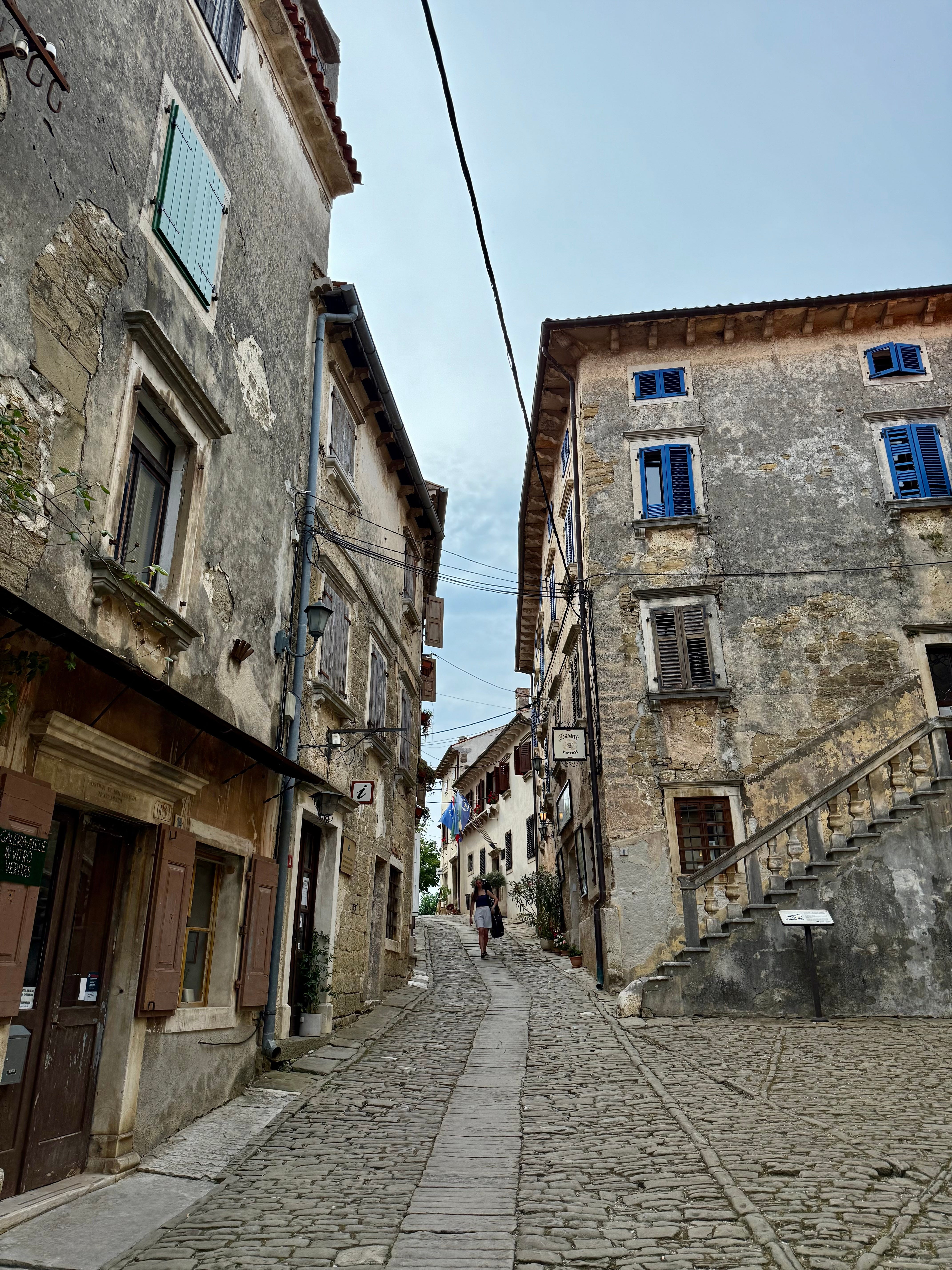
Perched on a hilltop, Grožnjan is a haven replete with galleries, studios, cobblestone streets, and old stone houses. The quick visit to the atelier of artist Marko Brajković was a perfect introduction to the town’s artistic soul.
Motovun
(Tourism Website)
A medieval hill town overlooking the Mirna Valley, Motovun is one of Istria’s most iconic destinations. Known for wine, truffles, festivals, and stunning views, it’s also home to Roxanich Winery & Design Hotel, where wine and culture converge.
Hotel & Ristorante San Rocco
(Website)
In the quiet town of Brtonigla-Verteneglio, San Rocco combines boutique hospitality with gourmet cuisine. Its fine-dining restaurant, housed in a restored family estate, offers regional dishes paired with local wines.
Hotel & Restaurant Zlatna Vala
(Website)
Nestled by the sea near Umag, Zlatna Vala offers a casual coastal dining experience. Local seafood and Istrian specialties made it a befitting close to a day of tasting and exploration.