
Villa Sandahl
Riesling Rising in Badacsony

Badacsony is one of Hungary’s most distinctive regions. Similar to Somló, one of the country’s top destinations for those in the know, and nearby Szent György-hegy, a steep volcanic mountain rises sharply from the northern shore of Central Europe’s largest lake, Lake Balaton.
Badacsony’s basalt-laden soils, created through ancient volcanic activity, retain heat and are replete with minerals. Combined with the lake’s moderating climatic effect, it’s an ideal combination for growing and making white wines such as Olaszriesling (Welschriesling), Kéknyelű, Budai Zöld, Muscat, Riesling, and Szürkebarát (Pinot Gris). Global recognition has lagged behind its potential, in spite of regional producers like the award-winning Sabar Borház, with its “’A small hill of great wines”, Gilvesy Pincészet, and Villa Sandahl.
Tucked into Badacsony’s slopes is where Villa Sandahl’s Nordic vision meets Badacsony terroir. Its Swedish founders, Christer and Thord Sandahl and their families, established the winery in 2004. What makes the estate stand out is its unwavering commitment to a single variety: Riesling. The Sandahl family has chosen focus over breadth, allowing the volcanic terroir to shine. Today’s Villa Sandahl, under the leadership of Christer Sandahl and winemaker and estate manager Zsolt Palkó, has six organically farmed vineyards totaling nine hectares (a little more than 22 acres). The volcanic soil and unique microclimate impart mineral-driven complexity and vibrant acidity, creating Rieslings that are distinctly Badacsony.
A visit to Villa Sandahl in early December offered a peek at how volcanic terroir, low-intervention vineyard management, and a unique single-varietal focus are contributing to Badacsony’s exciting wine scene. The winery offers a unique blend of Scandinavian-style guesthouse hospitality, volcanic-soil Rieslings, and panoramic Lake Balaton views. For wine and travel lovers seeking an off-the-beaten path, sensory escape, this is a story about discovering a true hidden gem.
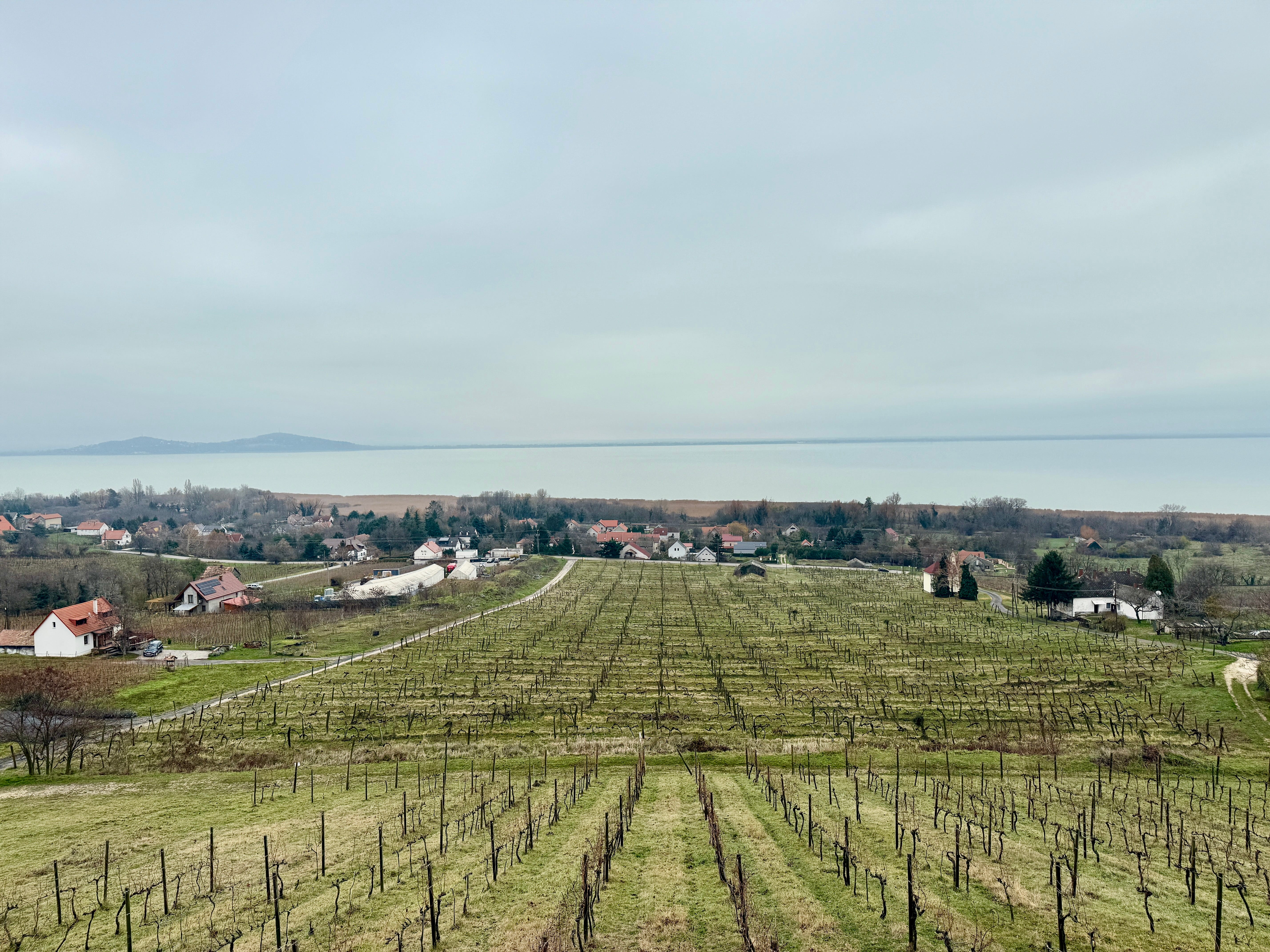
Arriving late by train from Zagreb on December 3rd, there was very little I could see on this dark and misty evening. Although still quite foggy and overcast the following morning, I was amazed at the steep, sloping vineyards overlooking Lake Balaton. The guesthouse, where I spent two nights, is perched on the mountain less than a mile from the town center, offering guests a panoramic view of the area. The house has a warm, minimalist vibe, perfect for those who want to balance wine travel with comfort and tranquility.
The guesthouse underscored Villa Sandahl’s dual role as both a wine producer and a destination for wine enthusiasts. The accommodations include daily breakfast, a complimentary bottle of one of Villa Sandahl’s Rieslings, and reliable WiFi connectivity, features that appeal to visitors seeking inclusive wine travel experiences. The gorgeous view was the icing on top, sloping vineyards with Lake Balaton in the background.
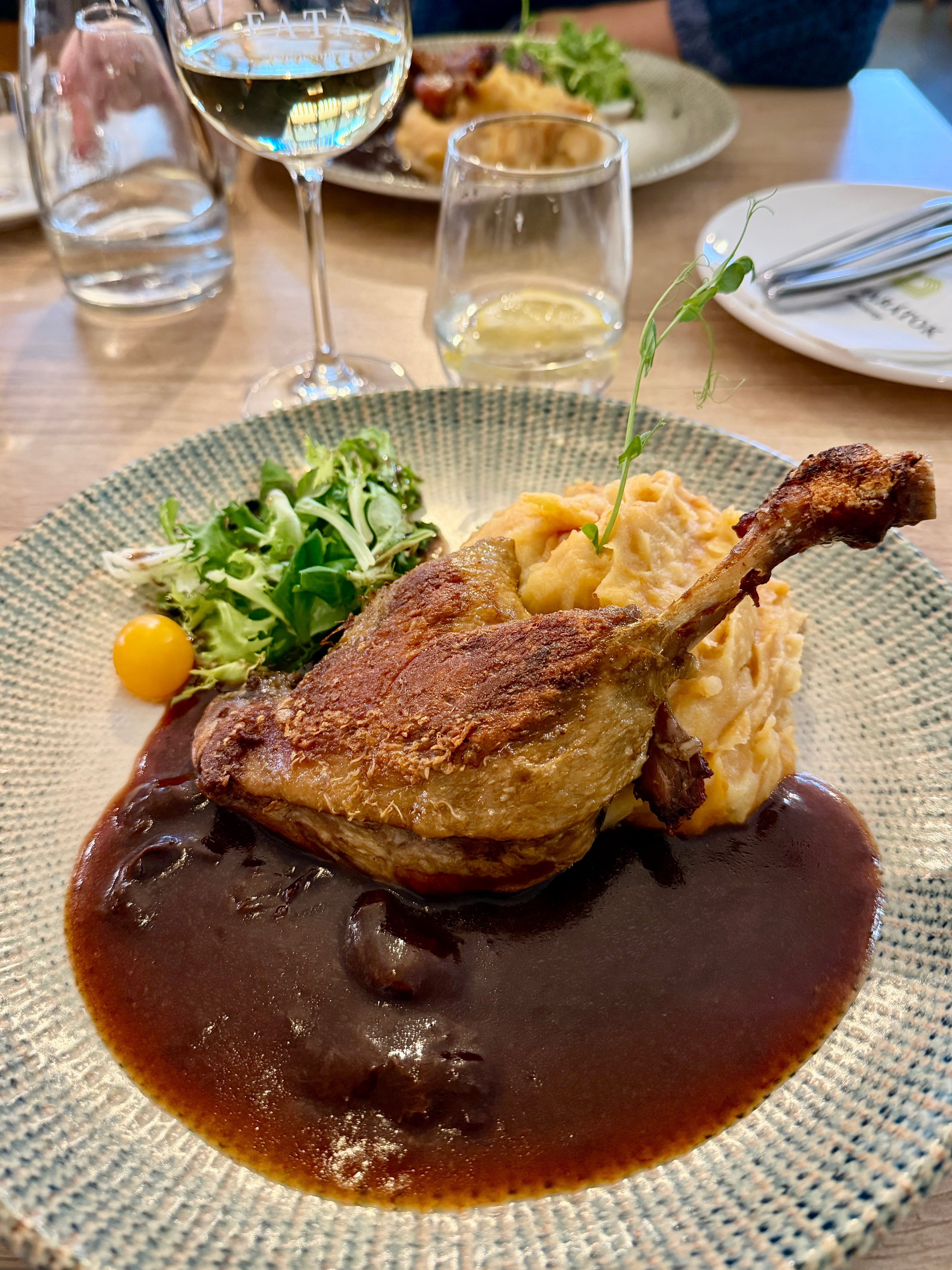
Before meeting with Zsolt Palkó, I had lunch at Borbarátok Panzió, operated by Fata Pince. The meal set the tone for my visit, a lovely example of Badacsony hospitality and cuisine. The tavern-style dining room served exactly what I wanted on a December day: hearty, Hungarian comfort food paired with Fata’s Kéknyelű, an ancient Hungarian white variety.
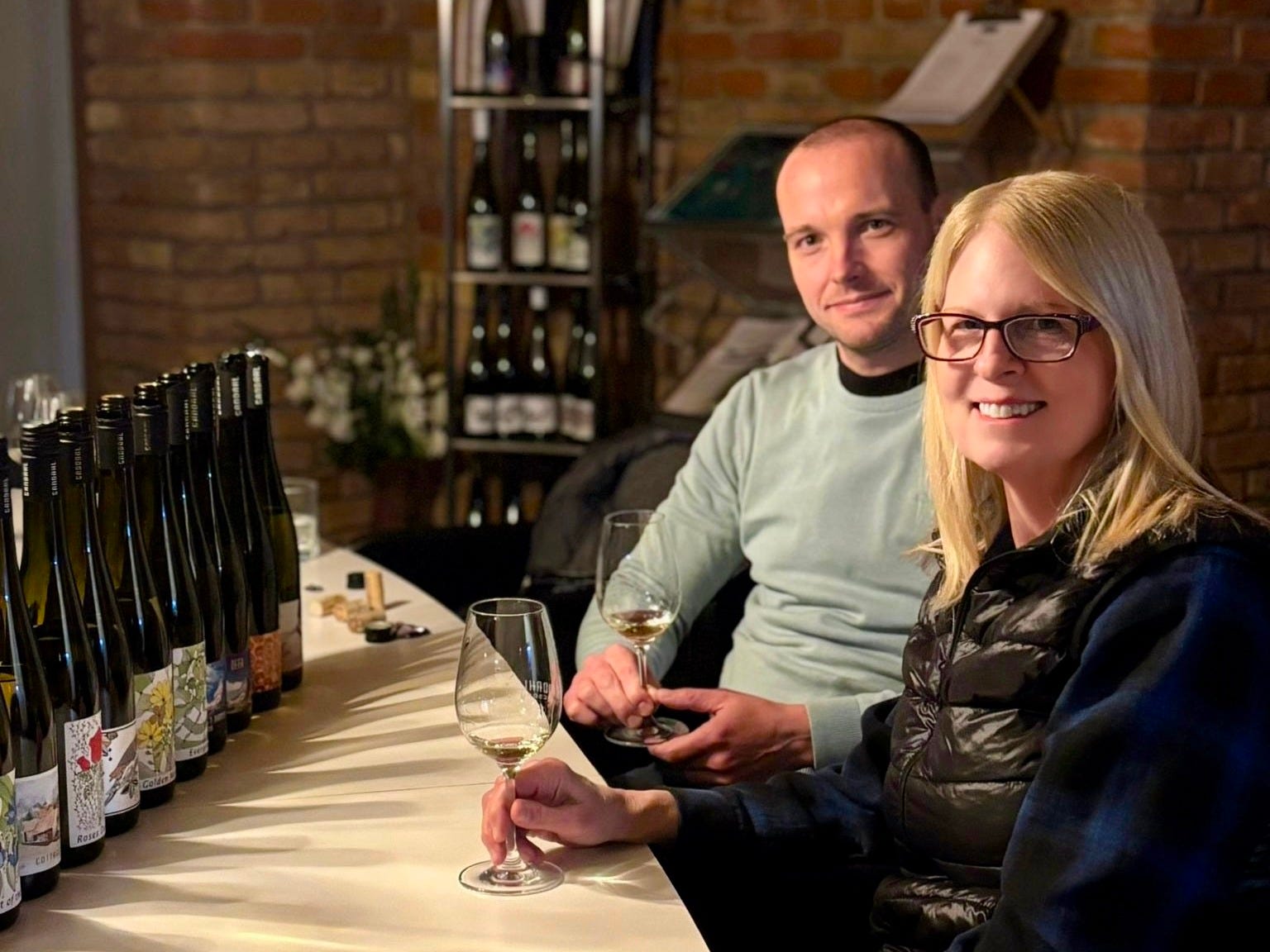
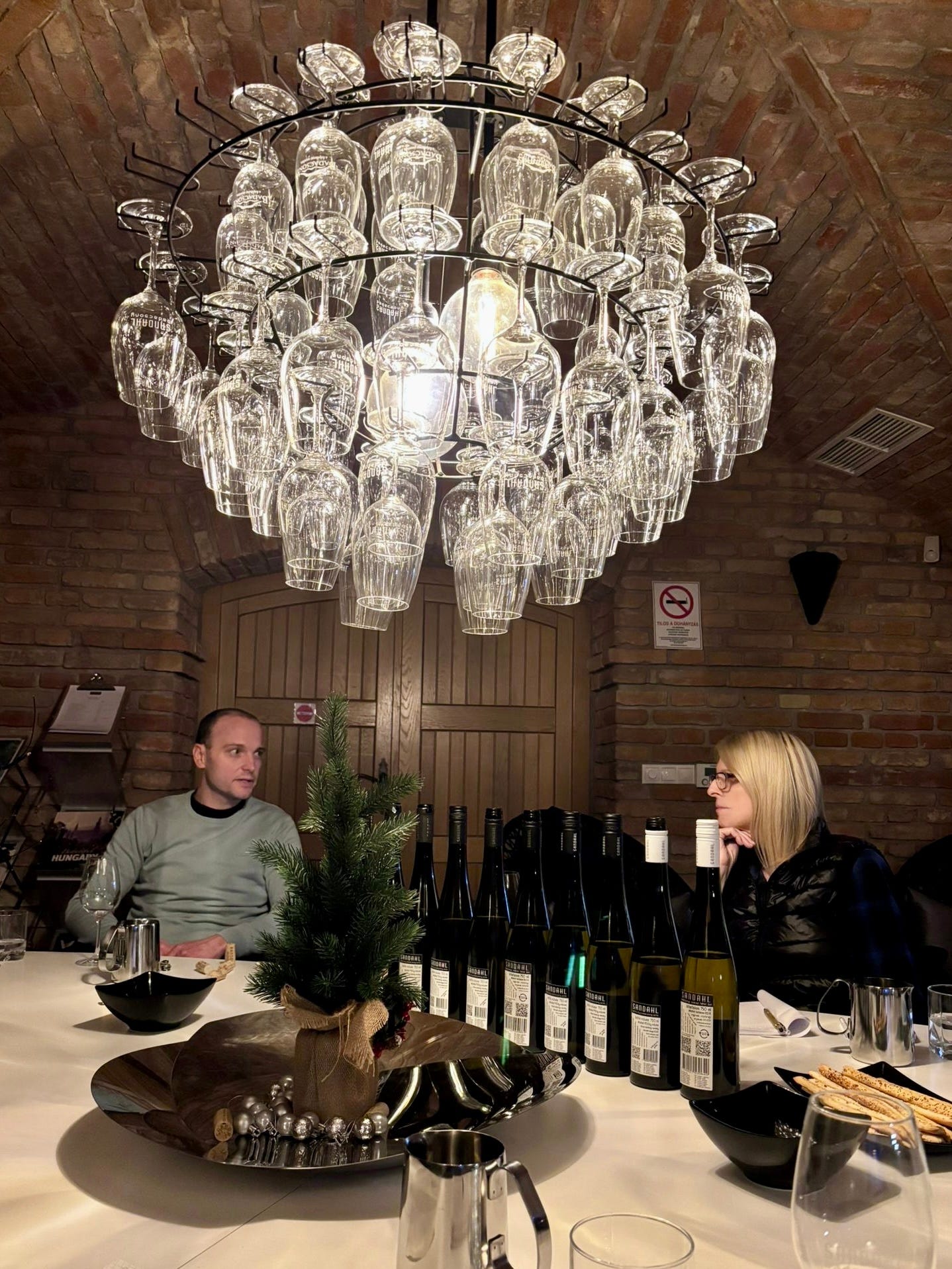
The focus of my visit was the tasting with Palkó, who presented eleven Rieslings representing multiple vineyard parcels and vintages. Each of the vineyards is harvested and vinified separately, allowing for comparisons of soil variation, elevation, and microclimate influence. Palkó emphasized the estate’s ongoing commitment to allowing each parcel to express its own identity. “Riesling tells the truth,” he said. “So, we let every parcel speak.” The estate’s approach also includes creating specially designed labels for each wine and vintage. With a modest production of around 10,000 bottles across 15 labels, and a commitment to quality over quantity, Villa Sandahl deserves more much more attention than it currently receives.
The younger wines were bright and energetic, with delicate floral aromas, a citrus-driven flavor profile, and a touch of salinity, characteristics typical of Riesling grown on basalt. An example we tasted was Slow Down 2023, whose juicy citrus and crunchy tree fruit flavors danced lightly across a delicate vein of salty minerality.
Out of the Blue 2022, with a touch of botrytis, was rich and honeyed, while the Cottage Cheese 2021 showed a zesty tang. The floral and fruity Roses Darling 2022 reflected its warm vintage: rich, round, and replete with succulent flavors like nectarines and peaches. Soft Feathers 2023 showed off elegant and refined purity of fruit without losing sight of its backbone of Badacsony minerality.
Wines from higher elevations, like Evergreen 2022, from the highest parcel of the Genesis Vineyard, and Golden Moments 2022, from the winery’s Bishop Buckyard Vineyard, were more classical in style, with razor-sharp minerality.
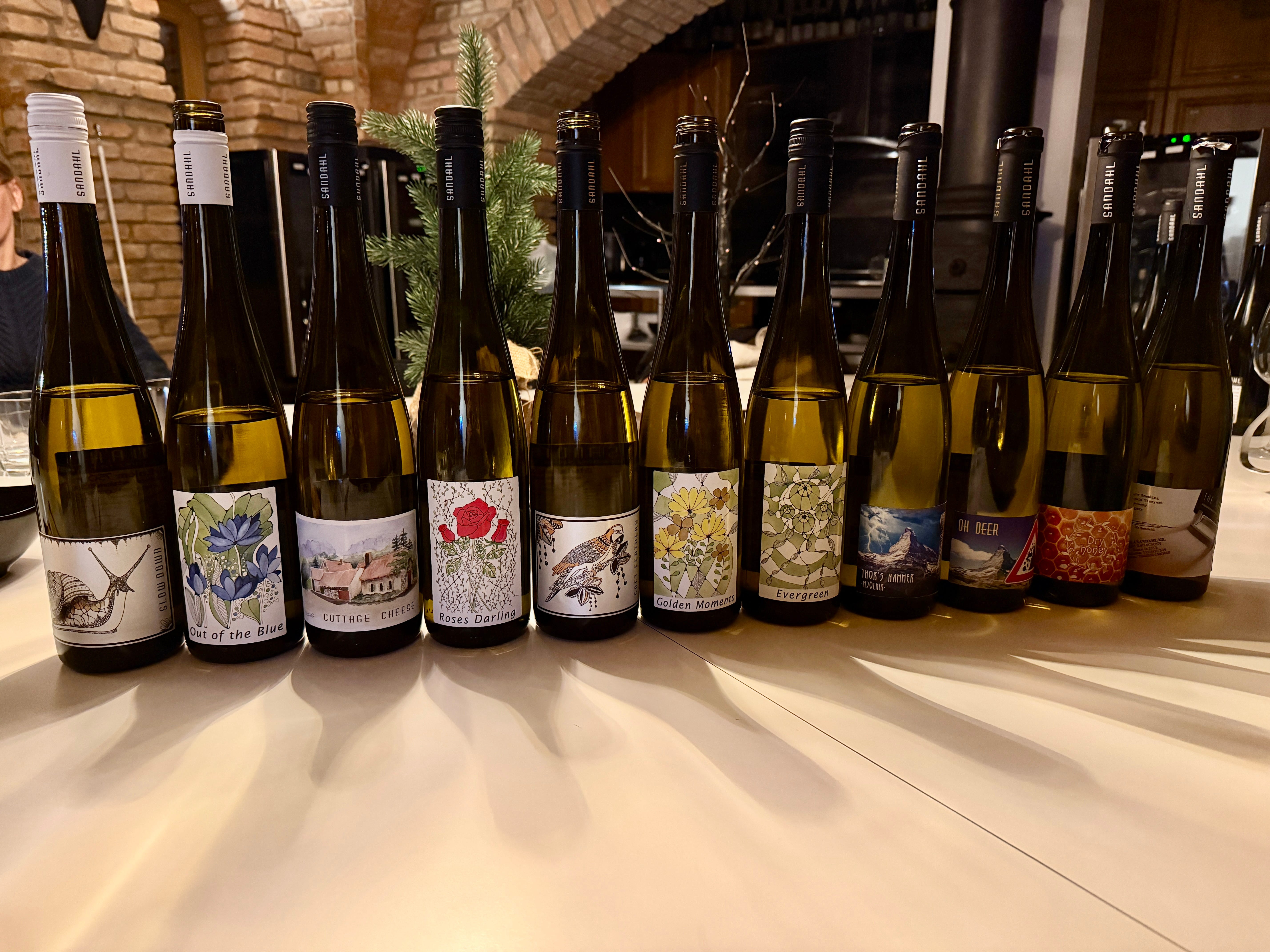
The older vintages demonstrated complex textural development and layered fruit flavor profiles, without losing their volcanic edge. The later harvest Oh Deer 2018 teetered between its ripe fruit core and lively, mouthwatering finish, while the aptly named Dry Honey 2015 dripped with honeyed citrus, thanks to botrytized grapes. In spite of its age, The Stamp 2010 was still lean and spry.
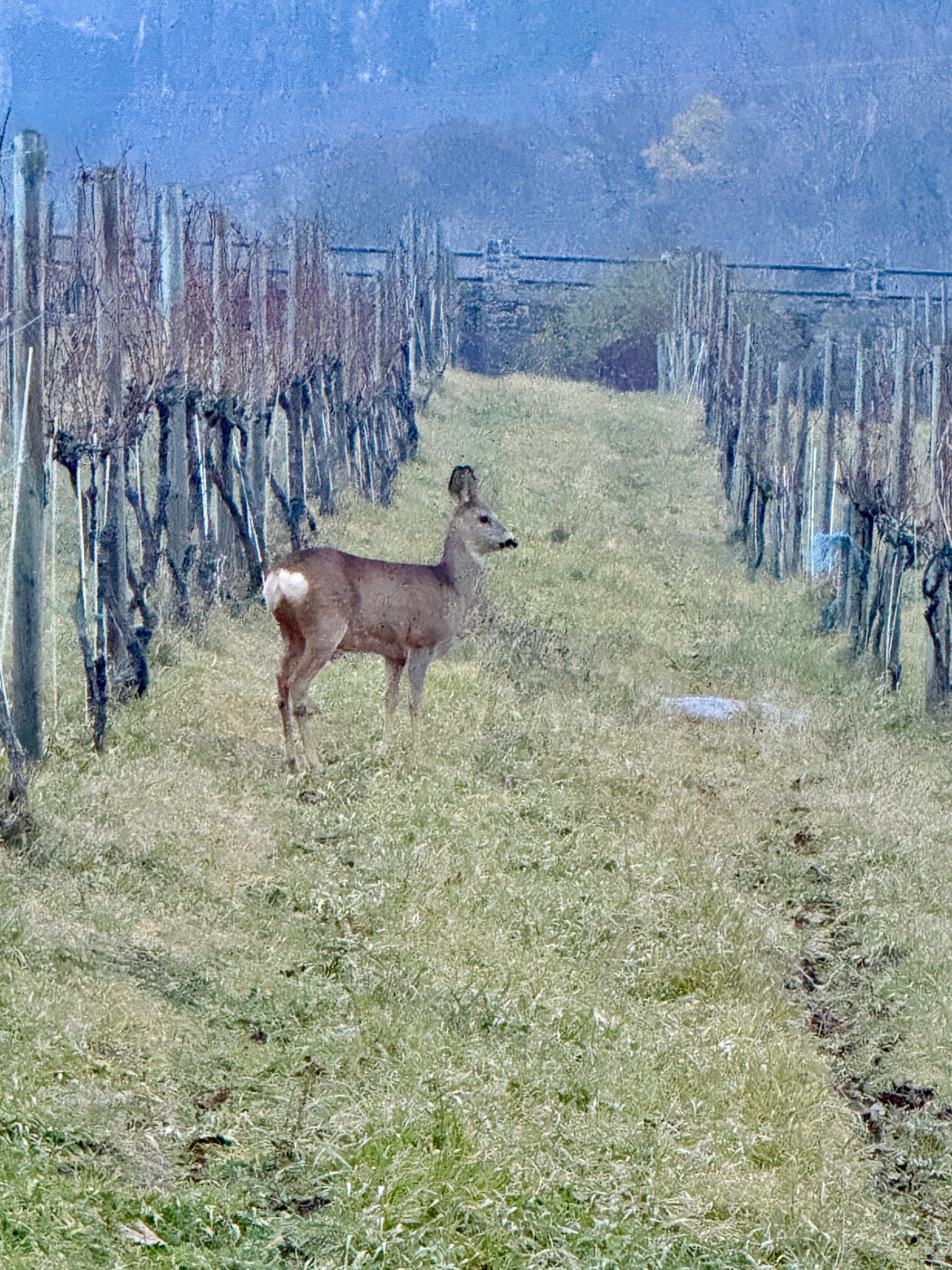
While alone at the guesthouse that early evening, I peered through the back windows to look at the Genesis Vineyard. I caught a glimpse of a few deer moving between the dormant vines, a reminder of the estate’s low-intervention farming.
My return trip to Zagreb on December 5th underscored the accessibility of Badacsony for local and international travelers. The region is easily reachable by car, as well as by train, from both Budapest and Zagreb.
Villa Sandahl’s model of a single-varietal focus, parcel-specific vinification, Badacsony’s volcanic terroir, and integrated hospitality is notable in Hungary’s emerging boutique wine sector. For travelers seeking a peaceful winery retreat, it offers an experience that is intimate and immersive.
Villa Sandahl’s story is like no other. It’s one of Riesling rising from a volcanic landscape, and a guesthouse perfectly positioned to let visitors sip, stay, and see. As interest in volcanic wines continues to increase globally, Villa Sandahl is a key producer to watch, as it continues to elevate both the profile of Riesling and Badacsony.